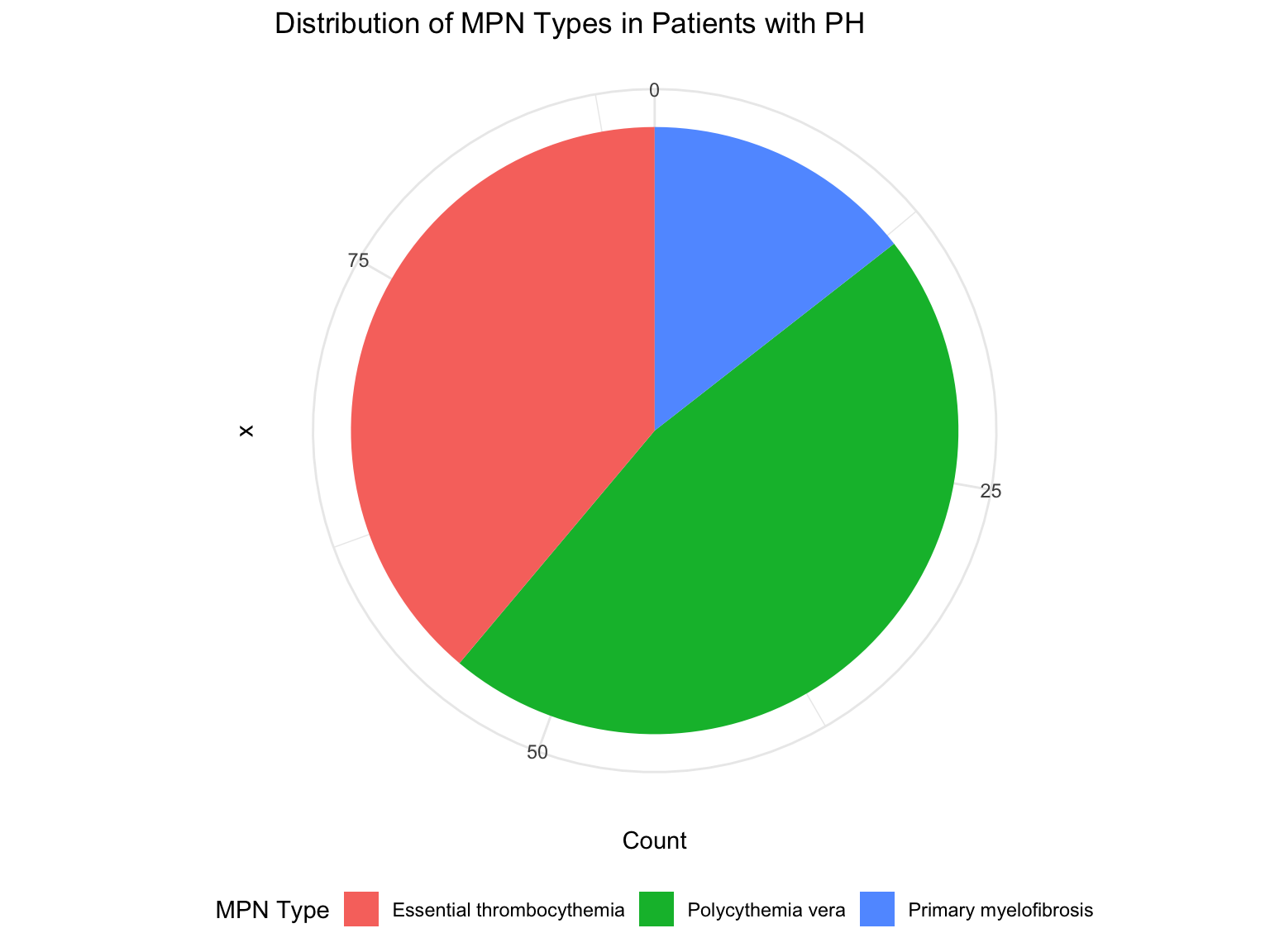
| MPN Type | Count | Percentage (%) |
|---|---|---|
| Polycythemia vera | 42 | 46.7 |
| Essential thrombocythemia | 35 | 38.9 |
| Primary myelofibrosis | 13 | 14.4 |
Pulmonary Hypertension in Myeloproliferative Neoplasms
Analysis of Montani et al. (2023) Study Findings
4.1 Introduction
Myeloproliferative neoplasms (MPNs) are disorders of clonal hematopoiesis that include polycythemia vera (PV), essential thrombocythemia (ET), and primary myelofibrosis (MF). Pulmonary hypertension (PH) has been associated with MPNs and classified by the World Health Organization in group 5 (unclear and/or multifactorial mechanisms). This analysis examines the findings from Montani et al. (2023) published in the American Journal of Respiratory and Critical Care Medicine, which investigated the prevalence, hemodynamic characteristics, etiologies, and prognostic implications of PH in MPNs.
4.2 Study Population
The study identified 90 patients with MPNs with precapillary or combined pre-/postcapillary PH from a national PH registry. The distribution of MPN types among these patients is shown below:
4.3 PH Etiology by MPN Type
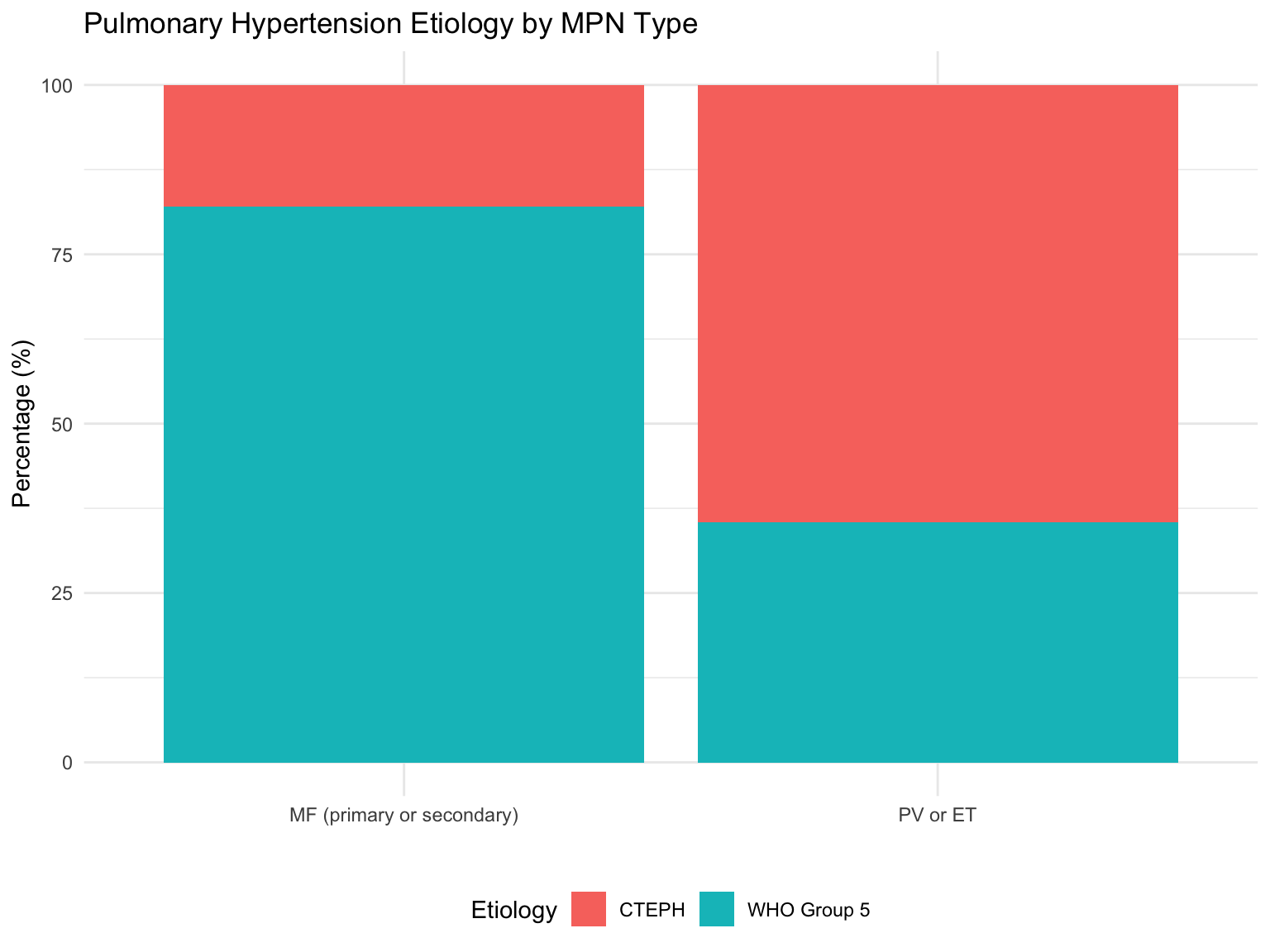
The study found different patterns of PH etiology depending on the MPN type:
| MPN Type | PH Etiology | Percentage (%) |
|---|---|---|
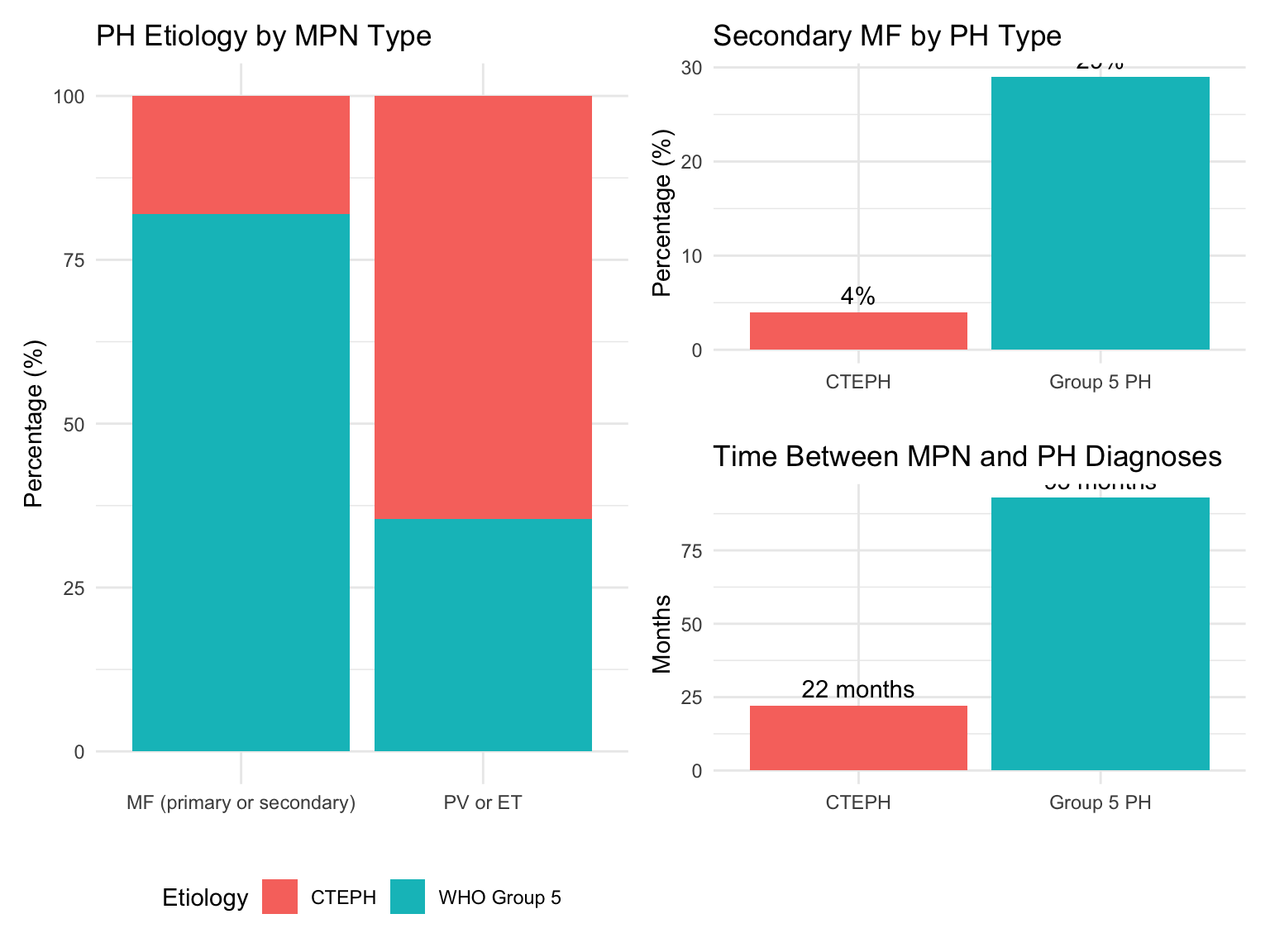
| PV or ET | CTEPH | 64.5 |
| PV or ET | WHO Group 5 | 35.5 |
| MF (primary or secondary) | CTEPH | 18.0 |
| MF (primary or secondary) | WHO Group 5 | 82.0 |
Key findings:
- Among patients with PV or ET, CTEPH (Chronic Thromboembolic Pulmonary Hypertension) was the most common etiology (64.5%)
- Among patients with MF (primary or secondary), WHO Group 5 PH was the most common etiology (82%)
4.4 Secondary Myelofibrosis and PH Type
The study found a significant difference in PH types among patients with secondary MF:
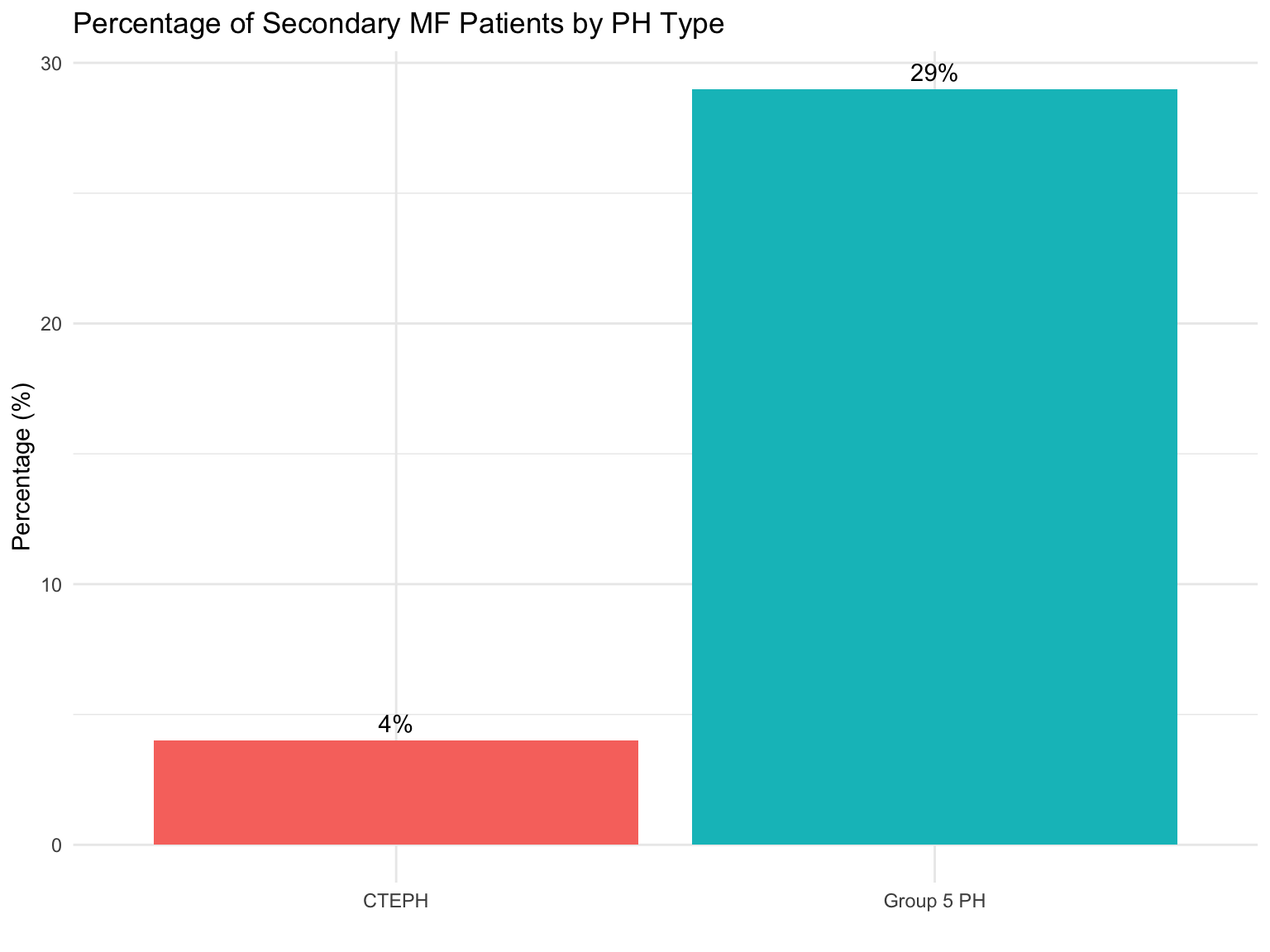
Significantly more patients with secondary MF had Group 5 PH than CTEPH (29% vs. 4%, p<0.01).
4.5 Time Between MPN and PH Diagnoses
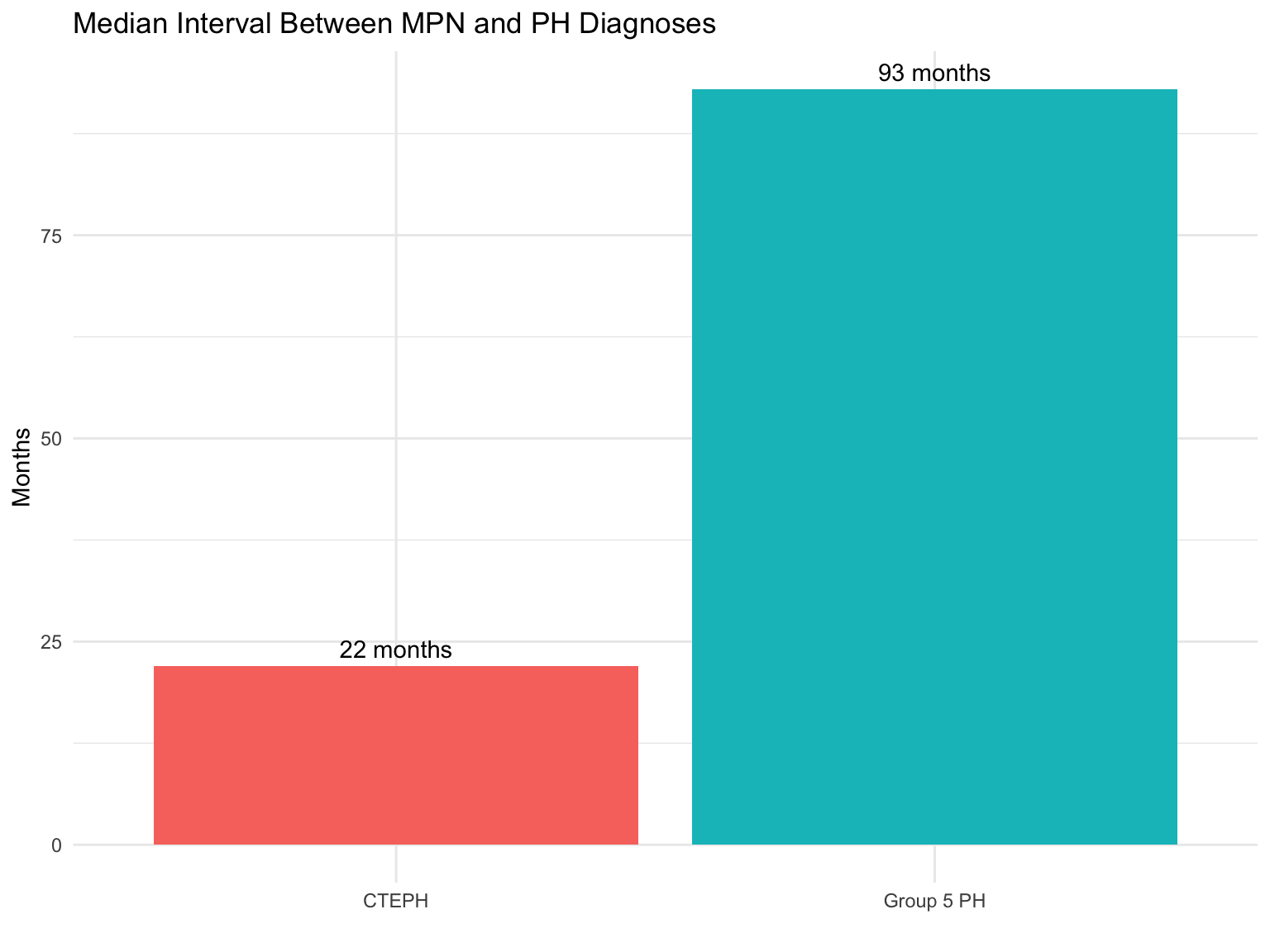
Patients with Group 5 PH had a longer interval between MPN and PH diagnoses (median, 93 vs. 22 months; p<0.01).
4.6 Combined Visualization
4.7 Clinical Implications
The study by Montani et al. (2023) suggests two predominant phenotypes of precapillary PH in patients with MPNs:
- A thrombotic phenotype (CTEPH) - more common in PV and ET
- A nonthrombotic phenotype (WHO Group 5) - more common in MF and potentially related to disease progression and extramedullary hematopoiesis
The association between Group 5 PH and MF, along with the finding that PH was associated with progression to MF among patients with ET and PV in prior studies, suggests that:
- PH screening may be beneficial in patients with MPNs for disease progression surveillance
- Clinicians caring for patients with MPNs who experience dyspnea should consider workup for PH
4.8 Limitations and Future Directions
Several questions remain unanswered by this study:
- The prevalence and phenotype of PH meeting the newer criteria (mean pulmonary artery pressure >20 mm Hg instead of >25 mm Hg) among patients with MPNs is unclear
- Echocardiography characteristics were not reported in this study
- The true prevalence and etiologies of PH among asymptomatic patients with MPNs remain to be elucidated
- The role of driver and non-driver mutations in PH development needs further investigation
4.9 References
Montani D, Thore P, Mignard X, et al. Clinical phenotype and outcomes of pulmonary hypertension associated with myeloproliferative neoplasms: a population-based study. Am J Respir Crit Care Med. 2023;208:600-612.
Leiva O, Ren S, Neuberg D, et al. Pulmonary hypertension is associated with poor cardiovascular and hematologic outcomes in patients with myeloproliferative neoplasms and cardiovascular disease. Int J Hematol. 2023;117:90-99.
Leiva O, Hobbs G, Ravid K, Libby P. Cardiovascular disease in myeloproliferative neoplasms: JACC: CardioOncology state-of-the-art review. JACC CardioOncol. 2022;4:166-182.